
Breathing New Life into a Remarkable Grade II Listed Barn
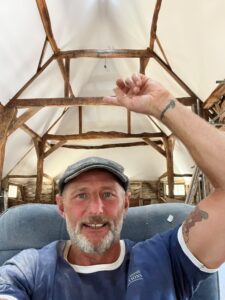 Restoring a historic building is never simply a construction project. It requires patience, technical knowledge and a deep respect for the original craftsmanship. For Lee Wheeler, owner of Classic Home Solutions and member of The Guild of Master Craftsmen, these qualities have been essential during the first phase of an extraordinary Grade II listed barn conversion at Tadley Place.
Although there is still a considerable amount of work ahead the completion of Phase 1 marks an important milestone in the transformation of this magnificent thatched barn. The project is already showcasing Lee’s ability to combine traditional building expertise with the careful problem-solving required when working with a centuries-old structure.
 Celebrating the Character of the Original Barn
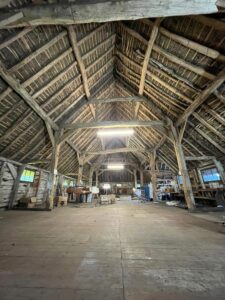
At the heart of the restoration is the barn’s impressive oak frame. Rather than concealing its historic structure, the approach has been to preserve and celebrate it, allowing the original beams and roof construction to become defining features of the future home.
For Lee, this is one of the achievements he is most proud of.
“Looking back at what has been achieved so far I am particularly proud of the transformation of this Grade II listed thatched barn and the care that has gone into preserving and showcasing its original character” he explains. “Most of all I am incredibly proud of the oak structure and the way we have been able to incorporate it into the conversion.”
That achievement has demanded far more than conventional building knowledge. Every stage has required detailed planning, close inspection and a thorough understanding of how historic materials and structures behave.
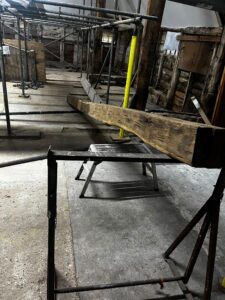 One of the most technically demanding elements involved replacing what became known as the “banana beam”, a severely bowed purlin forming part of the barn’s main supporting structure. The extent of the damage was not initially visible because much of the beam was concealed within the depth of the thatched roof, it was only after scaffolding had been erected that the true condition of the timber could be properly assessed.
Three Months of Precision and Patient Problem-Solving
The discovery presented a considerable challenge. The barn had been rethatched only three years earlier so replacing the beam had to be achieved without damaging the recently completed roof or compromising the rest of the structure.
Lee and the team devised a carefully controlled system of cross props to gradually transfer the substantial weight and pressure of the thatch away from the damaged purlin. Over approximately three months, the thatch was slowly eased away until there was sufficient space to remove the failing beam and install its replacement safely.
It was a painstaking operation requiring precision, patience and confidence built through years of practical experience. Rushing the work could have caused serious damage, both to the historic barn and its newer thatch.
This willingness to pause, assess and find the correct solution is central to Lee’s approach to heritage restoration. Older buildings rarely respond in predictable ways and problems are often only revealed once work is under way. Experience is therefore vital, not only in completing the physical work, but also in recognising when an original plan must be reconsidered.
 “You need to be prepared to take your time and not rush decisions,” Lee says. “You must understand the building, think carefully about every stage of the work and be able to adapt when unexpected issues arise.”
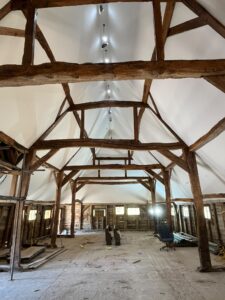
The eventual vision is to create a comfortable modern family home without diminishing the character that makes the barn so special. The exposed oak framework and roof structure will take centre stage complemented by a clean contemporary design. By keeping the new elements crisp and understated, the craftsmanship and natural beauty of the historic structure will be allowed to speak for themselves.
An Achievement Worthy of Guild Recognition
After months of meticulous structural work, the moment that brought the scale of the achievement into focus came when the scaffolding was finally removed.
For the first time, Lee and the team could step back and appreciate the barn’s full proportions, along with everything they had accomplished during the opening phase. The reaction from those who have seen the transformation has been described as one of genuine “shock and awe”.
The quality of the work has also attracted admiration from fellow building professionals. Graham Nash of Pinnacle Builders made an eight-hour round trip from Leeds specifically to view the project. For Lee, recognition from someone who understands the complexity, craftsmanship and attention to detail involved is particularly rewarding.
The Guild is proud to celebrate Lee’s achievements during this challenging first phase. As an outstanding Guild member his work demonstrates the knowledge, patience and commitment to higher levels of skill and service that sit at the heart of Guild membership. His handling of the damaged purlin together with the care shown towards the original oak structure is an exceptional example of the expertise required to restore an important historic building responsibly.
Phase 1 may be complete but the Tadley Place barn conversion is still only at the beginning of its journey. As the restoration continues, further stages will reveal how this remarkable structure is transformed into a distinctive family home.
The Guild looks forward to following Lee and the Classic Home Solutions team as they begin the next stage of the conversion. What has already been achieved is a powerful demonstration of Lee Wheeler’s expertise. Through skilled craftsmanship, careful problem-solving and genuine respect for the building’s heritage, he is helping to protect an outstanding barn while preparing it for an exciting new chapter in its long history.