Making Tax Digital for Tradespeople and Craft Businesses: What to Do Before April 2027
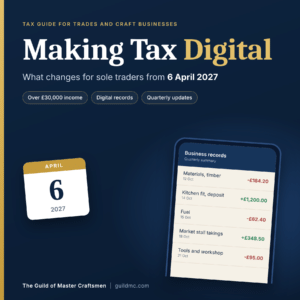 Making Tax Digital (MTD) for Income Tax becomes compulsory on 6 April 2027 for sole traders and landlords with gross income above £30,000. It does not apply to limited companies, although it can affect a company director who also trades in their own name. If that is you, you will need to keep digital records, use HMRC-recognised software and send HMRC a short update every three months. This guide explains who is affected, what to do and the dates to know.
Who needs to follow Making Tax Digital from April 2027?
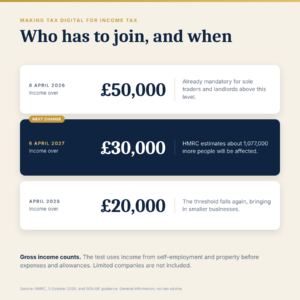
MTD for Income Tax is being phased in by income. It is already mandatory for sole traders and landlords with income over £50,000 (from April 2026). It extends to those over £30,000 on 6 April 2027, which HMRC estimates will bring in around 1,077,000 more people, and the threshold falls to £20,000 in April 2028.
The test uses gross income from self-employment and property, before expenses and allowances are deducted. A tradesperson turning over £32,000 with healthy expenses is still caught. Your income from an earlier tax year decides whether you are in (2025 to 2026 for April 2027), so check your figures now.
Does it apply to limited companies, partnerships and mixed businesses?
MTD for Income Tax covers individuals, so how you trade matters.
- Sole traders: Yes, once qualifying income passes the threshold.
- Limited companies: No. A company is not included, though a VAT-registered company may already use Making Tax Digital for VAT.
- Partnerships: Not yet. HMRC says partnerships will need to use it in the future, with no start date given. Individual partners should ask their accountant how their own income is treated.
- Company directors: Salary and dividends do not count towards the threshold, but a director who also trades in their own name or lets out property is assessed on that income.
Craft and allied trades are often caught by surprise because income is spread across sources. Takings from a market stall, an online shop, commissions and a rental property are added together before the threshold is applied.
 What do tradespeople actually have to do?
- Sign up on GOV.UK. You must be registered for Self Assessment and have submitted a tax return in the last two years.
- Choose compatible software. HMRC publishes a list of recognised products. If you use spreadsheets, you will need bridging software to send updates.
- Keep digital records all year. Each record needs the amount, the date and the category of the income or expense.
- Send quarterly updates. These are short summaries of income and expenses, not extra tax returns.
- Submit your tax return. The Self Assessment deadline of 31 January remains.
When are the quarterly update deadlines?
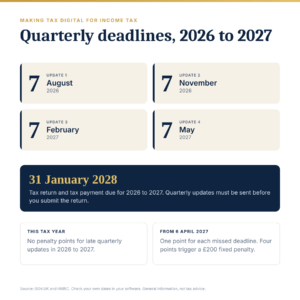
In the 2026 to 2027 tax year, updates are due on 7 August, 7 November, 7 February and 7 May. Expect the same pattern in later years, but check the dates your software shows for your own accounting period.
What happens if you miss a deadline?
HMRC says there are no penalty points for late quarterly updates in 2026 to 2027. From 6 April 2027, each missed deadline earns one point, and four points trigger a £200 fixed penalty. Late tax returns and late payments are still penalised.
 Practical tips for tradespeople
1. Separate business and personal money. A dedicated business account makes records far easier.
2. Capture receipts on the day. A photo of the materials invoice taken at the merchant beats a crumpled slip in the van in January.
3. Set reminders for the 7th. Put the four deadlines in your diary now.
4. Practise before April. Choose your software and build the habit while the stakes are low.
5. Talk to an accountant. This guide is general information, not tax advice.
6. If you sell in several places, record market takings, online orders and commission payments in the same software from day one, and keep materials and workshop costs against the right income.
Frequently asked questions
- Is Making Tax Digital compulsory for sole traders? Yes, if your gross self-employment and property income is over £50,000 now, or over £30,000 from 6 April 2027. The threshold drops to £20,000 in April 2028.
- Can I still use spreadsheets? Yes, but only with bridging software that sends your figures to HMRC. You cannot send quarterly updates directly from a spreadsheet.
- Do I still need to file a tax return? Yes. Quarterly updates do not replace your Self Assessment return, which is still due by 31 January.
- Does Making Tax Digital apply to limited companies? No. Limited companies are not included in MTD for Income Tax. A director who also trades as a sole trader or lets out property may still be affected on that income.
Work with professionals who raise the standard
Whether you are a sole trader, an artisan or the owner of a growing company, keeping on top of your tax is part of running a trusted business. Guild of Master Craftsmen members are vetted and accredited, and we support them with practical business guidance. To find out how membership could help your business, join the Guild. Homeowners looking for a tradesperson who takes their obligations seriously can search Find a Craftsman.